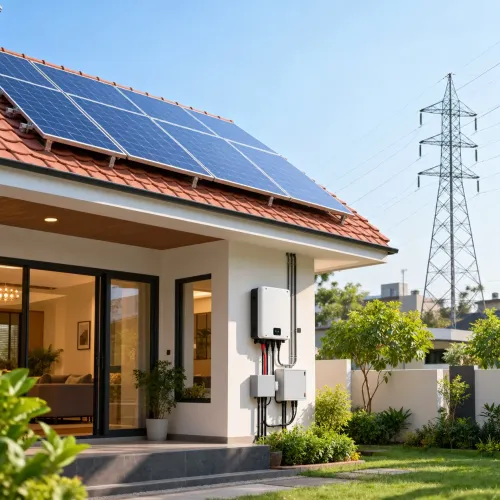
Rising household electricity consumption has encouraged many property owners to examine renewable energy options. Solar Panels for Home can generate part of a household's electricity from sunlight, potentially reducing the amount of energy that needs to be drawn from the conventional grid.
The actual benefit depends on system size, household consumption, roof conditions, and how electricity is used throughout the day.
Solar Generation Happens During Daylight Hours
Solar panels produce electricity when sunlight reaches the photovoltaic cells.
The strongest generation generally occurs during suitable daylight conditions, although actual output varies according to weather, panel orientation, temperature, shading, system losses, and other factors.
This means household consumption patterns matter.
Homes that operate appliances during the daytime may use a larger proportion of solar generation directly.
Start With Your Electricity Bills
Before choosing a system, review several months of electricity bills rather than focusing on a single billing cycle.
Look for:
- Average monthly units consumed
- Seasonal increases
- High-load appliances
- Daytime consumption
- Expected future requirements
Air conditioners, water heaters, pumps, kitchen appliances, home offices, electric vehicle charging, and other equipment can significantly influence household demand.
Understanding these loads helps determine an appropriate solar capacity.
Roof Conditions Affect Suitability
Residential roofs are rarely completely empty.
Water tanks, staircases, utility structures, antennas, neighboring buildings, and trees can influence the amount of space available for panels.
The roof should also remain accessible after installation. Homeowners may need access for waterproofing, tank maintenance, plumbing work, or cleaning.
Good system design considers these requirements before deciding the final module layout.
Grid-Connected Systems
Many residential installations are designed to operate alongside the electricity grid.
Solar generation can support household loads while the grid remains available according to the system configuration and applicable utility arrangements.
Consumers considering this option should understand the relevant metering, approval, and interconnection procedures before proceeding.
What About Power Cuts?
A common misconception is that every solar installation automatically provides electricity during a grid outage.
That is not necessarily the case.
Whether solar can support loads during an outage depends on the system architecture. Systems designed specifically for backup may incorporate batteries, hybrid inverters, or other equipment.
Homeowners who consider backup essential should communicate this requirement during the design stage.
Maintenance Should Be Practical
Residential panels may accumulate dust, leaves, bird droppings, and other debris.
Cleaning requirements vary according to the site, but safe access should be considered from the beginning.
Homeowners should also keep an eye on inverter indicators or monitoring systems because unexpected drops in generation can indicate that inspection is needed.
Consider Long-Term Household Changes
A solar system may operate for many years, while household electricity requirements can change.
Before finalizing capacity, consider whether you may later add:
- More air conditioners
- Additional rooms
- Electric cooking equipment
- A home office
- Electric vehicle charging
- Additional water pumping
Not every future requirement needs to be included immediately, but discussing likely changes can improve planning.
Solar Panels for Home are most useful when selected according to actual energy needs rather than generic package sizes.
For homeowners evaluating renewable energy solutions, Madhuri Solar is one of the providers serving different solar applications. The important step is to understand consumption, roof suitability, system configuration, safety requirements, and expected generation before making the investment.
Keywords