The lowest quote can conceal missing permits, weak roof attachments, unsafe wiring, or an energy estimate built on optimistic assumptions. By comparing credentials, contract details, engineering evidence, safety controls, and completed-system records, you can select an installer whose work is safe, measurable, and supportable after commissioning.
Key takeaways
- Verify the installer’s legal identity, electrical authority, and completed project record.
- Compare quotations line by line, including equipment, labour, warranties, and exclusions.
- Choose the design with the strongest expected performance, not simply the most panels.
- Demand roof, electrical, testing, warranty, and maintenance documents at handover.
Screen the Installer Before Requesting a Final Quote
Before allowing a bid, verify the installer’s legal identity, electrical authority, safety system, and record of completed work. Solar panel installer qualifications are not proved by a sales presentation or a panel manufacturer’s brochure.
- Confirm the solar installer licence India requires in your state or municipality, plus current electrical contractor registration and the name of the licensed supervisor responsible for the work.
- Ask for company registration, GST details, public-liability insurance, worker-accident coverage, and written responsibility for permits, inspections, and utility interconnection.
- Request manufacturer-authorisation letters for the proposed modules, inverter, battery, and rapid-shutdown equipment. Check exact model numbers against the applicable safety listing, such as UL 61730 for modules and UL 1741 for utility-interactive inverters.
- Require a sample single-line diagram identifying NEC Articles 690, 705, and 706 where adopted, along with earthing, isolators, surge protection, cable routing, and rapid-shutdown provisions.
- Ask who supplies roof-edge protection, ladders, fall-arrest systems, electrical PPE, and jobsite supervision. Require written responsibility for flashing, waterproofing, roof penetrations, and leak repairs.
- Demand two recent customer references and documented utility interconnection experience with your distribution company.
| Credential | Evidence to request | Reject when |
|---|---|---|
| Electrical authority | Registration number and licence copy | Names or dates do not match |
| Insurance | Policy certificate and limits | Coverage excludes rooftop work |
| Warranty support | Separate product and workmanship terms | Only a headline panel warranty is offered |
Compare Written Quotations Line by Line
A low total can hide missing work. Compare each solar installation quotation against the same line items, then ask the installer to price every omission rather than treating it as included.
| Item | Quote A | Quote B | Confirm |
|---|---|---|---|
| Scope of work | Array, mounting, wiring, commissioning | Array only; roof work excluded | Who supplies flashing, isolators, earthing, labels, and testing? |
| Cost | Equipment, labour, tax, permits | Equipment and labour only | Include scaffolding, transport, inspection fees, and utility interconnection. |
| Payment milestones | Deposit, delivery, commissioning | Large advance payment | Tie payment milestones to measurable completion, not calendar dates. |
| Warranty | Panel and inverter terms | Separate workmanship warranty | Check labour, leak repair, removal, reinstallation, exclusions, transfer, and claims. |
| Responsibilities | Installer obtains permits and passes inspection | Buyer handles approvals | Name the authority having jurisdiction and utility-interconnection owner. |
A long equipment warranty does not cover a leaking roof or defective wiring. Require the scope of work to name attachment hardware, flashing, waterproofing, penetrations, and who pays for leak investigation and remediation.
If batteries appear, demand a separate line for the exact model, safety listing, location, clearances, temperature limits, ventilation, emergency shutdown, fire-code basis, permits, and testing. PV module and inverter listings do not automatically cover battery installation.
Reject “UL-listed” or “certified equipment” without model numbers and listing scope; in applicable markets, check references such as UL 61730 for modules and UL 1741 for inverters. Confirm who supplies fall protection, electrical PPE, supervision, permits, inspections, and utility documents before signing.
Judge the Design by Expected Performance, Not Panel Count
The stronger proposal is the one whose annual energy estimate survives scrutiny of the actual roof, not the one with more panels. Require each installer to show azimuth, tilt, weather data, module degradation, inverter clipping, wiring and mismatch losses, soiling or snow assumptions, and expected availability.
| Check | Credible proposal | Warning sign |
|---|---|---|
| Shading analysis | 3-D or horizon survey for every roof plane, including chimneys, parapets, trees and neighbouring buildings | “South-facing” listed without measured shade; high-production-hour losses ignored |
| Inverter sizing and string design | Module-to-inverter ratios, string voltage ranges, MPPT assignments and clipping losses shown | Panel wattage and inverter brand are the only technical figures |
| Energy comparison | Monthly and annual kWh forecast with assumptions that you can test in NREL PVWatts | One unexplained annual kWh number |
| Compliance | Applicable NEC Article 690, Article 705, Article 706 where storage is included, and locally adopted rapid-shutdown rules identified | Code compliance asserted without drawings |
Use the same roof geometry and consumption assumptions for every solar system design comparison. Reproduce a first-pass estimate in PVWatts and ask the installer to explain material differences.
Treat a performance guarantee as enforceable only when it defines the meter, irradiance or weather-normalisation method, allowed downtime, degradation, shading changes, curtailment, grid outages and remedy. For rooftop systems subject to NEC 690.12, confirm the array boundary, firefighter shutdown control, voltage-reduction time, and compatibility of listed module- or string-level equipment with the inverter.
Check Roof Engineering and Electrical Safety Details
Reject any plan that shows panel locations but not attachment details, structural checks, and electrical protection. The written design should show how solar roof mounting transfers loads to rafters or another verified structure, where penetrations occur, and how flashing and roof waterproofing will be restored.
- Require the roof plan to identify rail, hook, or bracket types; fastener sizes; corrosion protection; wind and dead-load calculations; access paths; and the person responsible for repairing leaks caused by the installation.
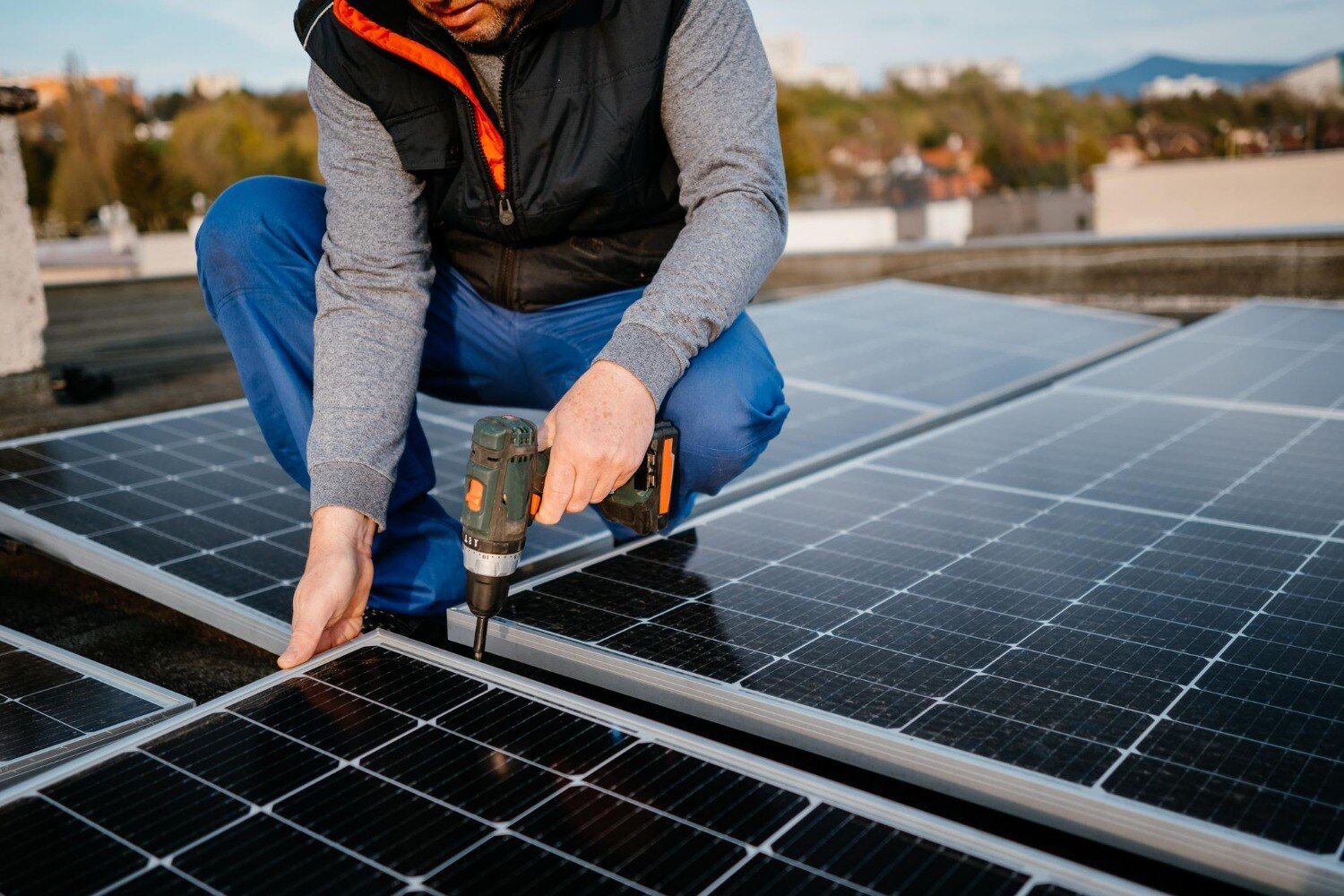
- Confirm that workers will use safe ladders, roof-edge protection, fall-arrest equipment, electrical PPE, and supervised work practices. Do not accept “installer safety” without named equipment and controls.
- Require a single-line electrical diagram showing module strings, inverter ratings, cable sizes, connector types, cable support, bend protection, labels, and shutdown points.
- Specify a DC isolator and AC isolator that remain accessible, clearly labelled, correctly rated, and protected from weather. Incompatible connectors or loose rooftop cables create heat and fire risks.
- Demand an earthing and lightning protection design, including module frames, mounting rails, inverter, earth conductors, bonding points, and surge protective devices. Ask who tests and records continuity and earth resistance.
- If batteries are included, require their safety listing, location, clearances, temperature limits, ventilation, emergency shutdown, fire-code basis, and extra permit or inspection requirements.
- Put roof-penetration repairs, workmanship, and equipment-removal labour in separate warranty clauses. A panel warranty alone will not pay for a leaking roof or defective installation.
Verify Completed Work and Demand a Complete Handover File
Do not release the final payment until the installed system matches the approved drawings and passes a documented commissioning check. Inspect cable routing, labels, mounting hardware, roof penetrations, flashing, and isolators; photograph defects before they disappear behind a handover certificate.
Ask for solar installer customer references whose systems have operated through at least one monsoon, and ask about leaks, generation, faults, and response times.
Request a complete file containing:
- The solar commissioning report, with insulation resistance, polarity, earthing and bonding checks, operating voltage and current measurements, and rapid-shutdown test results
- The as-built single-line diagram, showing array strings, isolators, inverter, protection devices, battery equipment, and grid connection
- Equipment model numbers, solar panel serial numbers and warranties, inverter records, and battery documentation where applicable
- Permit approvals, inspection sign-offs, utility interconnection documents, and test certificates
- Final protection settings, shutdown instructions, maintenance intervals, fault codes, and cleaning guidance
- Monitoring-account credentials transferred to you, with administrator access tested before handover
Read warranty terms separately. A panel warranty does not automatically pay for diagnosis, labour, shipping, removal, reinstallation, roof-leak repair, or defective workmanship. Confirm the workmanship and roof-penetration warranty period, exclusions, transfer rules, claim contact, and labour responsibility.
Whether you appoint Madhuri Solar or another provider, insist that these commitments appear in the contract, not only in a sales conversation.
Related products
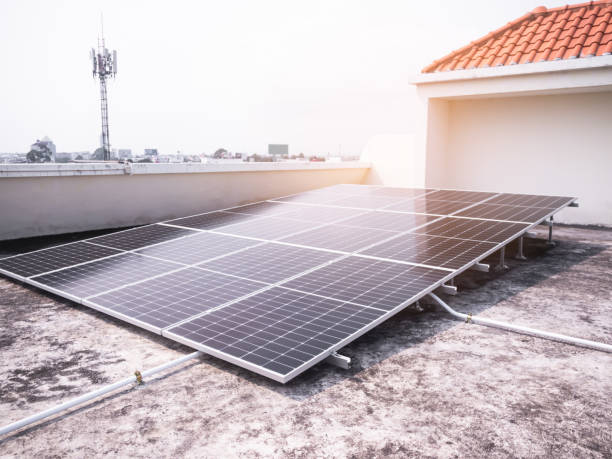 | Solar Rooftop Ongrid System A Solar Rooftop Ongrid System is an efficient, eco-friendly solution that converts sunlight into electricity. View product → |
 | Solar Offgrid System A Solar Offgrid System is an independent energy solution that operates without relying on the main power grid. View product → |
Frequently asked questions
What should you check before requesting a final solar installation quote?
Check the installer’s legal identity, electrical authority, safety system, and record of completed work before accepting a bid.
How should you compare solar installation quotations?
Compare written quotations line by line, checking the equipment, scope of work, warranties, exclusions, and other included costs.
How do you judge whether a solar system design will perform well?
Assess expected performance rather than panel count, and compare the design’s projected output with your site and electricity needs.
What safety details should a solar installer provide?
Review the roof engineering approach and electrical safety details, including how the installation will be mounted, connected, and protected.
What documents should you receive after solar installation?
Verify the completed work and request a complete handover file containing the installation, testing, safety, warranty, and maintenance records.